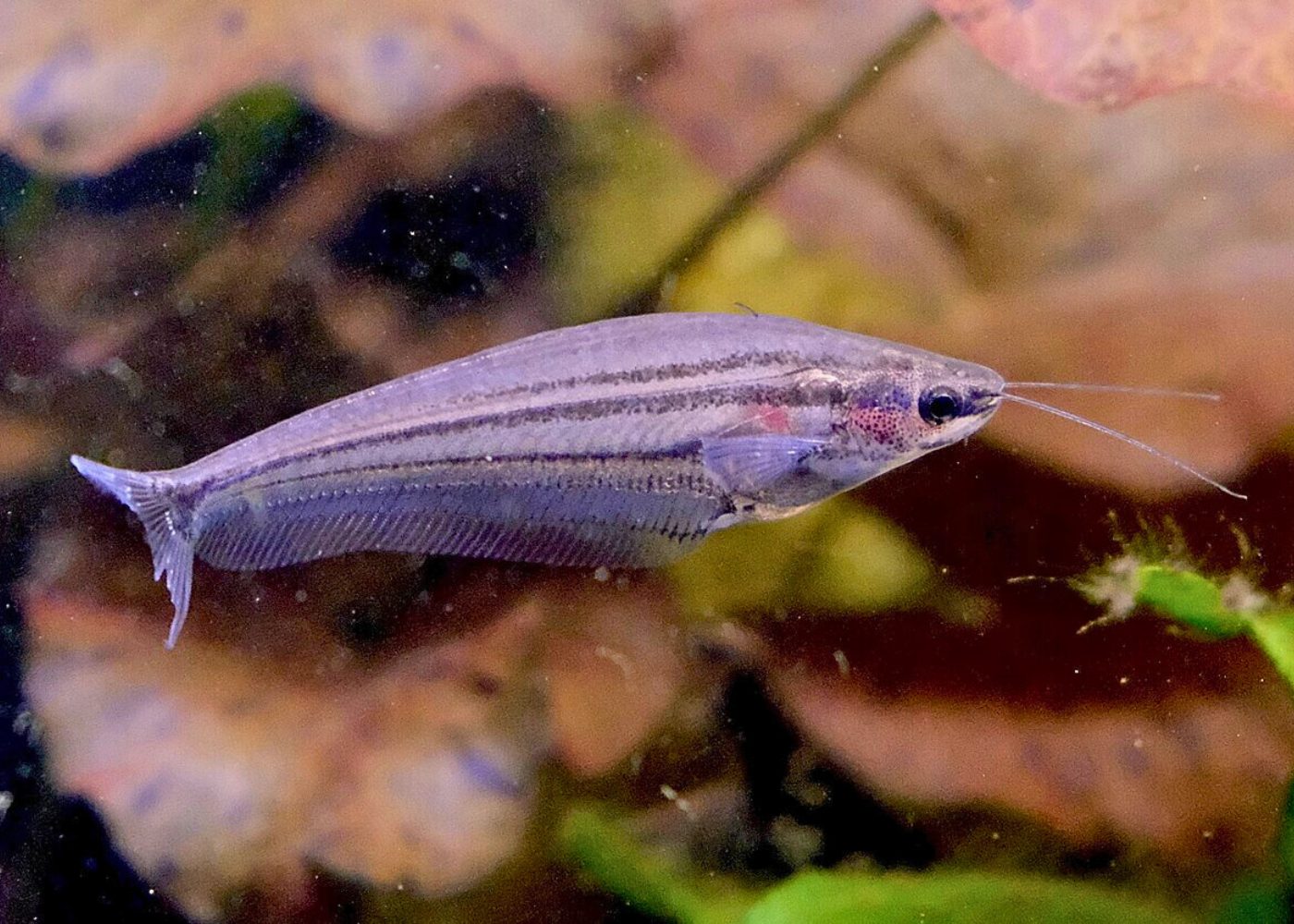
Striped Glass Catfish
A$14.95
A$14.95
5-7cm
Description
The Striped Glass Catfish (Kryptopterus macrocephalus) is a lesser-known yet visually intriguing freshwater species native to the slow-moving, tannin-stained waters of Southeast Asia. Not to be confused with the more transparent Ghost Glass Catfish (Kryptopterus vitreolus), this species is slightly more robust and displays faint vertical striping along its semi-transparent body. Peaceful and schooling by nature, the Striped Glass Catfish is well suited to mature, dimly lit aquariums that replicate its natural blackwater habitat.
Features of the Striped Glass Catfish
Grows up to 12–15 cm in length
Semi-transparent body with subtle vertical striping
Lacks scales and body pigment, making it sensitive to water quality and light
Peaceful and social; thrives in groups of 6 or more
Lifespan of 5–8 years with optimal care
The best aquarium size for the Striped Glass Catfish
A minimum tank size of 120 litres is recommended for a small school. A long, shallow footprint (90 cm or more in length) helps provide the horizontal swimming space they prefer. Soft, acidic water with stable parameters is essential.
Tank Mate Compatibility for the Striped Glass Catfish
This species does best with other peaceful, non-nippy fish that thrive in similar conditions. Avoid aggressive or boisterous tank mates. Suitable companions include:
Harlequin Rasboras
Ember Tetras
Kuhli Loaches
Sparkling Gourami
Otocinclus Catfish
Diet for the Striped Glass Catfish
Carnivorous and somewhat shy during feeding, this species prefers small, live or frozen foods:
Daphnia and brine shrimp
Bloodworms and tubifex
Micropellets or crushed sinking granules
Occasional high-quality flake food as a supplement
Feed in low-light conditions to encourage natural behaviour.
Aquarium Setup Striped Glass Catfish
Aquarium Filtration
Use a high-efficiency canister or sponge filter that provides gentle flow. Water should be clean but not turbulent, as the species comes from calm waters.
Aquarium Plants
Live plants are highly recommended. Use species like Java fern, Cryptocoryne, and floating plants such as Amazon frogbit to diffuse light and replicate blackwater conditions.
Aquarium Lighting
Low to subdued lighting is ideal. Use dimmable LEDs or shade parts of the tank with floating plants to reduce stress and highlight their translucent features.
Aquarium Heating
Maintain water temperatures between 24°C and 27°C. Ensure stability with a reliable heater and avoid sudden fluctuations.
Aquarium Substrate
Dark, soft substrates such as sand or fine gravel enhance their colouring and reduce stress. Avoid sharp or reflective materials.
Aquarium Decorations
Use driftwood, leaf litter, and smooth stones to create a natural blackwater environment. Provide ample hiding spots and shaded zones to support their schooling and resting behaviours.