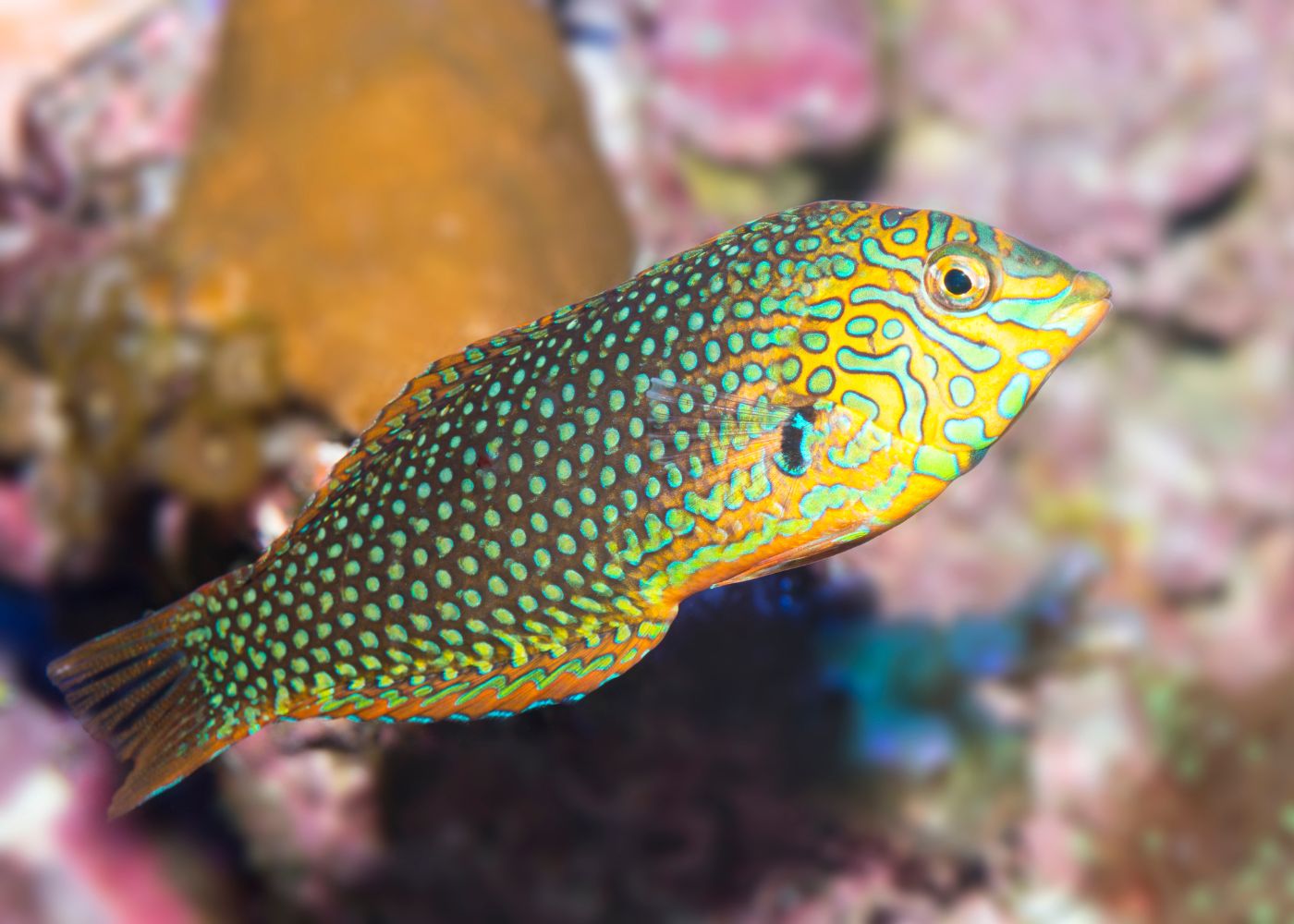
Wrasse - Green Leopard
A$120.00
A$120.00
6-10cm
Description
*This fish is marine species*
Macropharyngodon meleagris, commonly known as the Leopard Wrasse or Guinea Fowl Wrasse, is a highly sought-after marine fish known for its vivid patterning and complex behaviour. Native to the Indo-Pacific, this species inhabits coral-rich lagoons and outer reef slopes. Juveniles and females display a striking leopard-like pattern of black spots over a pale body, while terminal-phase males develop more vibrant colours with shades of blue, green, and red. The Leopard Wrasse is a peaceful yet sensitive species requiring precise aquarium conditions, making it more suitable for experienced marine aquarists.
Features of Macropharyngodon meleagris
Grows up to 15 cm in length
Displays sexual dimorphism and colour variation between life stages
Known for burying itself in sand when frightened or sleeping
Requires mature reef systems with established microfauna
Typically peaceful with other fish but may show aggression toward similar wrasses
The best aquarium size for Macropharyngodon meleagris
A minimum tank volume of 300 litres is essential to provide adequate swimming space and a deep sand bed for burrowing. Larger tanks exceeding 400 litres are recommended for housing multiple wrasses or mixed reef communities, allowing stable water parameters and more complex aquascapes.
Tank Mate Compatibility for Macropharyngodon meleagris
Clownfish (Amphiprion ocellaris)
Firefish Goby (Nemateleotris magnifica)
Banggai Cardinalfish (Pterapogon kauderni)
Royal Gramma (Gramma loreto)
Yellow Tang (Zebrasoma flavescens)
Diet for Macropharyngodon meleagris
This species is carnivorous with a preference for micro-crustaceans and live food. In captivity, feed a mix of enriched frozen foods like copepods, mysis shrimp, and brine shrimp. A mature tank with a live sand bed supports natural foraging. Due to its specialised diet, frequent small feedings are necessary. Supplement with high-protein marine pellets to ensure nutritional balance.
Aquarium Setup Macropharyngodon meleagris
Aquarium Filtration
Efficient biological filtration is critical, as this species is sensitive to nitrates and unstable conditions. A protein skimmer and refugium are recommended to maintain water quality and provide natural prey.
Aquarium Plants
As a marine species, macroalgae such as Chaetomorpha can be included in refugia. In the main display, corals rather than plants are more appropriate, offering natural shelter and enrichment.
Aquarium Lighting
Moderate to high-intensity reef lighting is ideal, particularly in coral reef tanks. Ensure a regular day-night cycle to reduce stress and support coral health if present.
Aquarium Heating
Maintain stable temperatures between 24–26°C using a high-quality heater and temperature controller. Avoid fluctuations, as the Leopard Wrasse is sensitive to environmental instability.
Aquarium Substrate
A soft sand bed of at least 5–7 cm depth is required. This is essential for the wrasse to bury itself at night or when stressed. Avoid coarse substrates that may cause injury.
Aquarium Decorations
Use live rock to create caves, crevices, and open swimming spaces. The aquascape should balance shelter with areas for free movement. Coral-safe, the Leopard Wrasse makes an excellent addition to mixed reef systems.